
Blog
Air Freight vs. Sea Freight: Which Is More Cost-Effective?
Air freight is faster but comes with higher shipping costs, while sea freight is significantly more economical for large shipments but can take several days to weeks. Explore the complete comparison before making your decision.
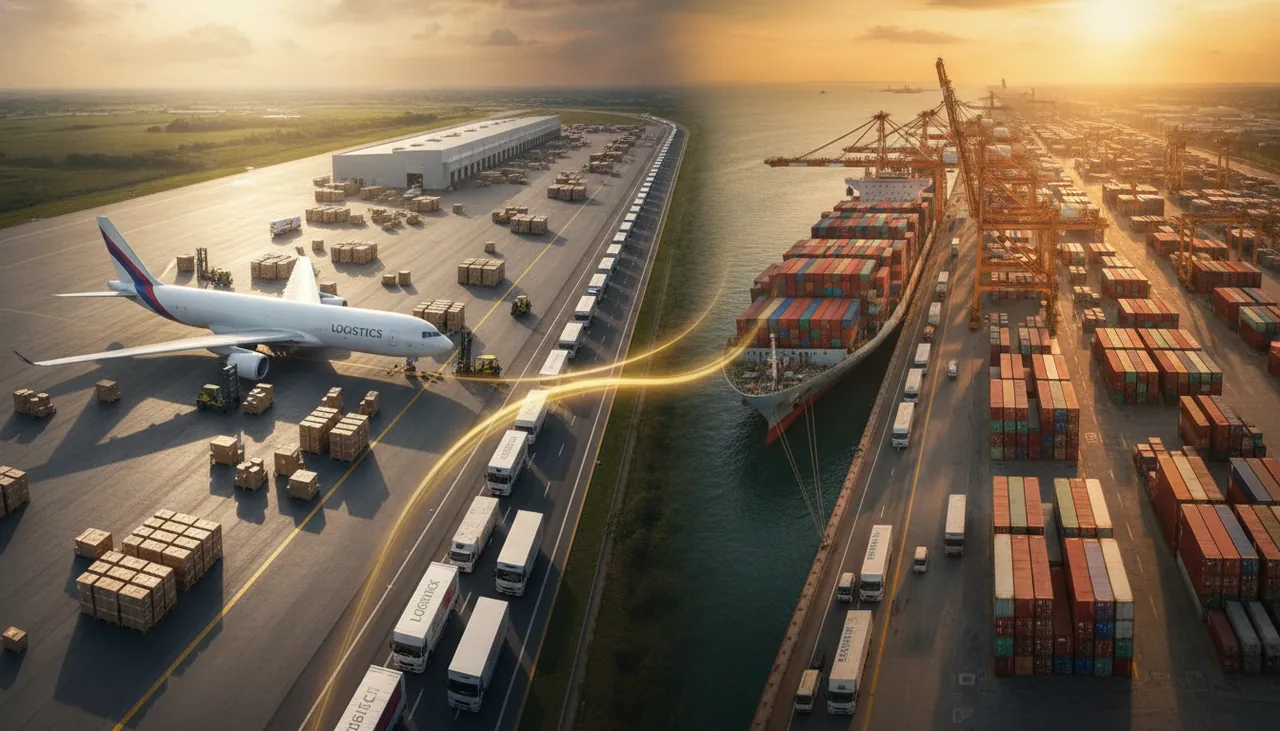
If you're wondering which is more cost-effective between air freight vs. sea freight, the answer depends on the weight, dimensions, and urgency of your shipment. In general, sea freight is much more economical for large and heavy shipments, while air freight is more efficient for lightweight goods that need to arrive quickly.
Key Takeaways:
Sea freight is typically 3–6 times cheaper per kilogram than air freight for inter-island routes.
Air freight offers faster delivery, taking 1–3 business days, while sea freight takes approximately 16–18 days, depending on the route.
Air freight is more suitable for lightweight, high-value goods or shipments with tight deadlines.
Sea freight is ideal for large, heavy, or oversized cargo, such as furniture, machinery, and construction materials.
The best option is not always the cheapest one, but the one that best suits your goods and business requirements.
How Much Do Air Freight and Sea Freight Costs Differ?
The price difference between air freight and sea freight can be significant, sometimes reaching 3–6 times for the same route. This is because the operating costs of cargo aircraft, including fuel, flight slots, and airport handling, are considerably higher than those of cargo ships or Pelni vessels.
Here is a general comparison of estimated shipping rates (these are estimates and may vary depending on the route, volume, and shipping company's policies):
Factor | Air Freight | Sea Freight |
|---|---|---|
Estimated rate per kg | Rp 7,000–Rp 20,000 | Rp 1,500–Rp 5,000 |
Minimum chargeable weight | 5 kg | 5 kg |
Cost for large shipments | High (volumetric weight-based) | Low (CBM-based) |
Insurance costs | Relatively low (lower risk) | Should be considered |
Cost efficiency for shipments over 100 kg | Less efficient | Highly efficient |
Note: All figures above are estimates. Actual prices are influenced by various factors. Always request an official quote from your shipping provider for accurate pricing.
Keep in mind that air freight uses volumetric weight as the basis for billing when your goods are lightweight but bulky. This often comes as a surprise to first-time shippers: items that feel light may be charged based on a weight significantly higher than their actual physical weight.
When Is Air Freight More Cost-Effective?
Air freight is more beneficial when goods are high in value, lightweight, or urgently needed. For electronics, medicines, jewelry, or product samples that must arrive within 1–3 days, the higher cost of air freight is often worth paying to avoid the risks associated with delivery delays.
Here are situations where choosing air freight makes sense:
High-value goods: When potential losses caused by delivery delays outweigh the difference in shipping costs.
Lightweight shipments (under 30 kg): When the nominal price difference compared to sea freight is not too significant.
Destinations with active airports: Such as Makassar, Balikpapan, Manado, or Jayapura, particularly when direct sea routes are limited.
Tight deadlines: For events, exhibitions, or production requirements that cannot be postponed.
Time-sensitive perishable goods: Items that can deteriorate quickly but are not classified as dangerous goods.
For estimated delivery times and a comparison of shipping speeds across different methods, see our guide to Cargo Shipping Delivery Time Estimates: Air, Land, and Sea.
When Is Sea Freight Clearly More Cost-Effective?
Sea freight is the best option when shipment volume is large and minimizing costs is the top priority. Routes such as Jakarta–Makassar, Jakarta–Balikpapan, and Jakarta–Sorong can be significantly more affordable by sea, especially for shipments weighing more than 50–100 kg.
Here are situations where sea freight is the right choice:
Heavy or bulky goods: Furniture, machinery, construction materials, and motorcycles.
Bulk shipments: For store restocking or distributing MSME products to other islands.
Non-urgent shipments: Goods that can wait 5–14 days without affecting business operations.
Major inter-island routes: Served regularly by Pelni or Ro-Ro vessels.
Budget-conscious shippers: Those looking to reduce logistics expenses as much as possible.
Sea freight is also suitable for MSMEs that regularly ship large quantities of products. By planning shipping schedules in advance, businesses can achieve significant cost savings compared to air freight.
Learn more in our article on Logistics Strategies for MSMEs: How to Ship Goods More Efficiently and Economically.
What Risks Should You Consider?
Comparing shipping costs is not just about looking at the rate per kilogram. Potential risks and hidden costs should also be included in your calculations.
Risks of air freight:
Flight cancellations or delays due to weather conditions or limited capacity.
Unexpected volumetric weight charges when goods are large but lightweight.
Not all types of goods can be shipped by air, including large lithium batteries, flammable materials, and other restricted items.
Risks of sea freight:
Longer and less predictable delivery times due to rough seas or vessel schedule delays.
Higher potential risk of damage if packaging is inadequate, particularly due to exposure to moisture during sea transportation.
Goods must be packed more securely to withstand repeated loading and unloading processes.
For both shipping methods, consider purchasing shipping insurance, especially for goods valued at more than Rp 1 million.
Learn whether cargo insurance is mandatory or optional in our article, Shipping Insurance: Is It Necessary?.
How to Choose Quickly
Use the following checklist to make your decision in just one minute:
Choose AIR FREIGHT if:
Your shipment weighs less than 30 kg.
Your goods must arrive within 1–3 days.
Your goods are high in value, and delays could result in significant losses.
Your destination has an active airport but limited access to nearby seaports.
Your goods are time-sensitive or perishable.
Choose SEA FREIGHT if:
Your shipment weighs more than 50 kg or is bulky.
You do not have a strict delivery deadline and can allow 5–14 days for transit.
Your destination has a seaport served by regular vessels.
Your main priority is minimizing logistics costs.
Your goods are durable and can withstand longer transportation times.
If most of your answers fall under the sea freight category, sea freight is likely the more economical choice. Otherwise, the additional cost of air freight is usually justified by its speed and reliability.
Is There a Middle-Ground Option?
If you cannot decide between speed and affordability, land freight can be an alternative for routes across Java and several transportation corridors in Sumatra and Kalimantan.
For destinations that are not directly accessible by ship or aircraft, a combination of land and sea transportation is also commonly used by professional logistics companies.
Data from Statistics Indonesia (BPS) shows that inter-island shipping volumes continue to increase, encouraging logistics companies to offer more multimodal transportation options tailored to shippers' needs.
Conclusion
Air freight vs. sea freight is not about which option is always better, but rather which one best suits your shipping requirements.
Sea freight consistently offers greater savings for large shipments and non-urgent deliveries, while air freight provides greater value when speed and delivery reliability are the top priorities.
Sentral Cargo offers both services, with air, sea (via Pelni and Ro-Ro vessels), and land transportation options covering destinations throughout Indonesia.
Contact our customer service team via WhatsApp to get the best shipping rates and recommendations for the most suitable transportation method for your shipment.
FAQ
Is sea freight always cheaper than air freight?
Generally, yes. Sea freight is typically 3–6 times cheaper per kilogram than air freight for inter-island routes. However, for very lightweight shipments (under 10 kg), the nominal price difference may not be significant enough to outweigh the benefits of faster air delivery.
How much faster is air freight compared to sea freight?
Air freight typically takes 1–3 business days to reach destinations with airports. Sea freight generally takes 5–14 days, depending on the route and vessel schedule.
For shorter routes, such as Jakarta–Surabaya, sea freight may be faster than expected, taking approximately 3–5 days.
Can all types of goods be shipped via air freight?
No. Certain goods are prohibited or restricted for air transportation, including high-capacity lithium batteries, large quantities of liquids, flammable materials, and certain chemicals.
Sea freight generally offers more flexibility for transporting these types of cargo, although applicable regulations must still be followed in accordance with the requirements of Indonesia's Ministry of Transportation.
How can I calculate whether air freight or sea freight is more cost-effective for my business?
Calculate the total logistics costs rather than focusing only on the shipping rate per kilogram.
Include factors such as additional packaging costs for sea freight, potential losses caused by delayed deliveries when using air freight, and shipping frequency.
If you regularly ship large volumes of goods, well-planned sea freight shipments will generally provide significant long-term savings.
Can air freight and sea freight be combined in a single shipment?
Yes. This is known as multimodal shipping.
For example, goods can be transported by sea from the port of origin and then transferred to land transportation by truck for final delivery to the destination city.
Logistics companies such as Sentral Cargo can help plan the most efficient combination of transportation methods based on your route and the type of goods being shipped.