
Blog
Common Cargo Packaging Mistakes That Often Cause Goods to Be Damaged
Goods damaged during shipping are often not the shipping company's fault, but the result of preventable packaging mistakes. Learn about the most common mistakes and how to avoid them.
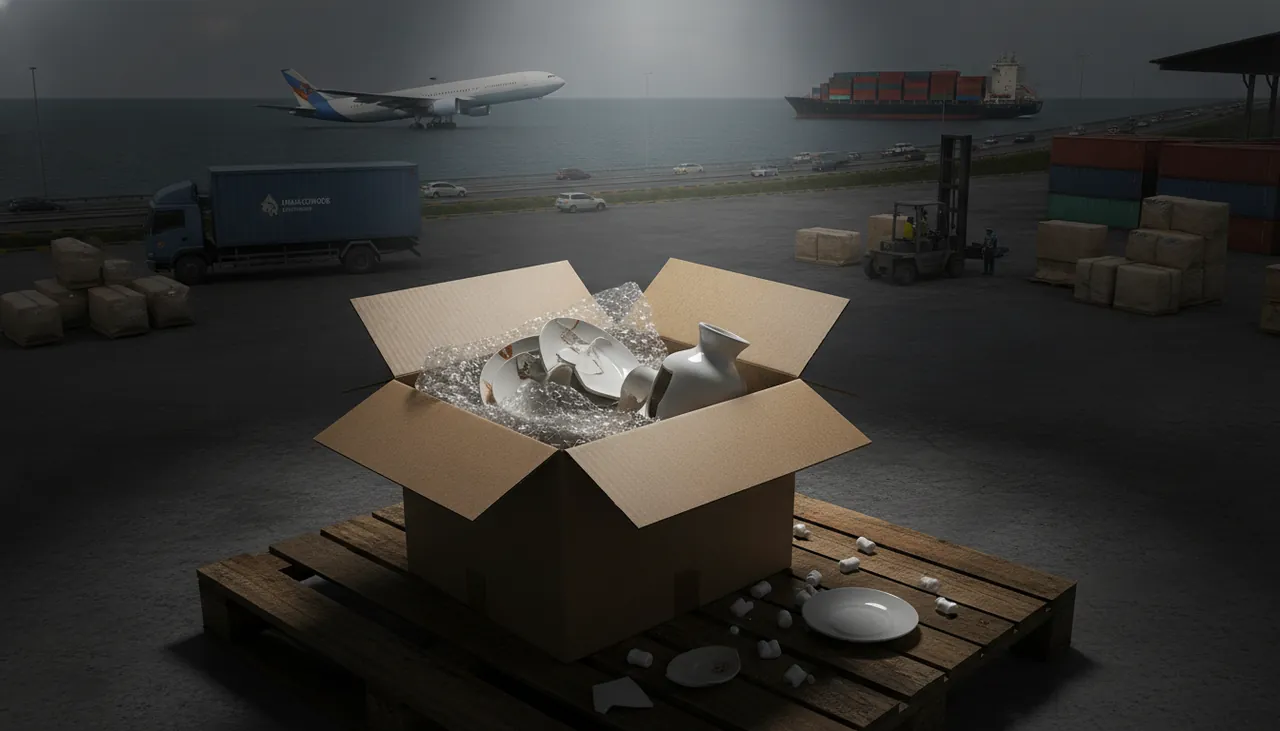
Common Cargo Packaging Mistakes That Often Cause Goods to Be Damaged
Cargo packaging mistakes are a major cause of damage during shipping — not simply courier negligence. Most cases of cracked, dented, or water-damaged goods can be traced back to improper packaging from the start. This article covers the most common mistakes and practical ways to avoid them so your goods arrive in perfect condition.
Summary:
Insufficient cushioning is the number one cause of items breaking during transit.
Boxes or cardboard cartons that are too large or structurally weak increase the risk of damage.
A FRAGILE label alone is not enough — adequate physical protection is still essential.
Packaging that increases volumetric weight can raise shipping costs without providing any real benefit.
A checklist before handing over your shipment to the shipping company can prevent up to 80% of common problems.
Why Do Goods Get Damaged Even When They Have Been Wrapped?
Many shippers assume that wrapping goods in a single layer of bubble wrap is enough. However, cargo shipping involves repeated loading and unloading, stacking with other goods, and vibrations during land and sea transportation. Items that appear to be 'protected' can still get damaged if their cushioning does not effectively absorb impacts. Understanding these weak points is the first step toward preventing your shipment from becoming another damage claim.
Mistake #1: Cushioning Is Too Thin or Uneven
Cushioning is the impact-absorbing layer between an item and the walls of its box. It provides the actual protection, rather than simply serving as outer wrapping. One of the most serious mistakes is using only one layer of bubble wrap for heavy or fragile goods, or leaving too much empty space inside the box, allowing items to move freely when shaken during transit.
Practical solutions:
Use at least 5–8 cm of cushioning on all sides for electronics and ceramic items.
Combine bubble wrap (for impact protection) with foam sheets or thick newspaper (to fill gaps).
Shake the box before sealing it. If the contents move, add more cushioning.
For fragile items, wrap each piece individually before placing it inside the main box.
Mistake #2: Using Weak or Oversized Cardboard Boxes
Used cardboard boxes that have been folded repeatedly lose their structural rigidity and can easily collapse when stacked. Oversized boxes are also dangerous because their contents can shift around, while stacking strength depends on a solid box structure — not empty space inside.
Choose new cardboard boxes with at least double-wall construction for items weighing more than 5 kg. Ideally, the box should be only 10–15 cm larger than the item's dimensions on each side, leaving enough room for cushioning. Seal all sides with clear or wide brown packing tape. Do not rely on thin tape for heavy boxes.
Mistake #3: Applying Only a 'Fragile' Label Without Adequate Protection
FRAGILE or THIS SIDE UP stickers are important, but they cannot replace sturdy packaging. During large-scale cargo sorting and loading operations, hundreds of packages are handled every hour. Labels may be overlooked or become difficult to see. Good physical protection is the only safeguard you can truly control.
Place labels on at least three sides of the box (top, front, and side) so they remain visible from different angles. However, treat labels as an additional precaution, not the main solution. If the goods are highly fragile, consider using a wooden crate or plywood box as the outer packaging.
Mistake #4: Ignoring Moisture Protection
Shipments transported by sea or land pass through various weather conditions, including rain, humidity, and extreme temperature changes. Electronics, documents, leather products, and textiles are vulnerable to moisture entering through gaps in improperly sealed boxes.
Line the inside of the box with PE (polyethylene) plastic or plastic wrap before placing the goods inside. For long-distance shipments or sea routes, add silica gel inside the box to absorb moisture. Make sure all box seams are sealed with packing tape without leaving any gaps. For more detailed transit protection guidance, read our article on how to pack cargo goods to prevent damage during shipping.
Mistake #5: Excessive Packaging That Increases Volumetric Weight
This is often overlooked: overly thick packaging or boxes that are much larger than the goods can significantly increase volumetric weight, making your shipping costs higher than necessary. The standard volumetric weight formula is length × width × height (cm) ÷ 6,000. If the calculated volumetric weight is greater than the actual weight, the volumetric weight will be used for billing.
This means you need to balance two priorities: providing sufficient protection without overpacking. Choose appropriately sized boxes and use efficient cushioning materials, such as custom-cut foam, instead of filling the package with unnecessary cardboard. Learn more about calculating volumetric weight in our article on volumetric weight: definition, formula, and how to calculate it.
Packing Checklist Before Handing Your Shipment to the Shipping Company
Use the following checklist before handing your package over at a service counter or to a courier:
No. | Inspection Item | Completed? |
|---|---|---|
1 | Goods wrapped in at least two layers of bubble wrap | ☐ |
2 | 5–8 cm of cushioning on all sides inside the box | ☐ |
3 | New or sturdy cardboard box in an appropriate size | ☐ |
4 | All seams sealed with wide packing tape | ☐ |
5 | Inner packaging lined with waterproof plastic | ☐ |
6 | FRAGILE / THIS SIDE UP labels attached to three sides | ☐ |
7 | Destination and sender addresses clearly written | ☐ |
8 | Silica gel added for moisture-sensitive goods | ☐ |
9 | Photos of the goods taken before packaging (for claim evidence) | ☐ |
10 | Volumetric weight checked against actual weight | ☐ |
One step that is often overlooked is taking photos of the goods before packaging. These photos can serve as valuable evidence if you need to file a cargo insurance claim. For additional protection, read our guide on shipping insurance: is it necessary? to determine whether your shipment needs financial protection.
Mistake #6: Not Separating Heavy and Lightweight Items in the Same Box
Placing heavy items on top of lightweight or fragile goods in the same box — or even in the same shipment — is a classic packaging mistake. During transit, the position of items can shift due to vibrations. A moving heavy item can crush the lighter goods around it.
The rule is simple: place heavy items at the bottom and lightweight items on top. If you must ship items with different weights and characteristics in one box, use cardboard or foam dividers between layers. For bulk or business shipments, consider packing each type of item in a separate box, even if they are shipped together.
Conclusion
Seemingly minor cargo packaging mistakes — insufficient cushioning, weak cardboard boxes, or inadequate moisture protection — can result in damaged goods, complicated claims, and real financial losses for your business. By following the checklist above and understanding the basic principles of strong yet efficient packaging, you can significantly reduce the risk of damage before your goods even leave your hands.
Need a shipping cost estimate or advice on how to ship your goods safely? Contact the Sentral Cargo team via WhatsApp or check shipping rates directly on our website. We are ready to help, from packaging to final delivery.
FAQ
Is the shipping company responsible if goods are damaged due to poor packaging?
Most shipping companies, including cargo providers, include clauses in their terms of service stating that damage caused by inadequate packaging is the sender's responsibility. That is why sturdy packaging is your first line of protection. Cargo insurance also generally does not cover claims if the damage is proven to have resulted from packaging that failed to meet the required standards.
Is bubble wrap enough to protect electronic items?
A single layer of bubble wrap is not enough for electronics shipped over long distances by cargo. Ideally, combine 2–3 layers of bubble wrap with foam padding inside a double-wall box, then wrap the outside with stretch wrap or PE plastic for moisture protection. For a complete guide to shipping electronics, read our article on how to ship electronic goods safely and affordably between cities.
How can I prove the condition of goods before shipping if I need to file a claim?
Photos or videos showing the condition of goods before packaging are the strongest evidence for the claims process. Make sure the photos show the items from multiple angles, including serial numbers or identification marks, if available. Also keep your shipping receipt and other documents as supporting evidence when filing a claim with the shipping company or insurance provider.
Are there specific packaging standards for sea freight?
There is no universal mandatory packaging standard for domestic sea freight. However, the general recommendation is to use waterproof packaging and sturdy box structures that can withstand stacking pressure. Wooden crates or plywood boxes are highly recommended for valuable or fragile goods shipped by vessel. For oversized items, consult the shipping company's team about packaging requirements before shipping.
Can overly thick packaging increase shipping costs?
Yes. If the final dimensions of a packaged box result in a volumetric weight greater than the actual weight of the goods, shipping charges will be calculated based on the volumetric weight. Therefore, choose appropriately sized boxes and efficient cushioning materials — enough to provide protection, but not so much that the package dimensions increase unnecessarily.