
Blog
How to Pack Goods to Prevent Damage During Long-Distance Shipping: A Complete Guide
Proper packaging is the first line of protection for your goods before they enter the shipping process. Follow this guide to ensure your shipments arrive safely, even after traveling long distances.
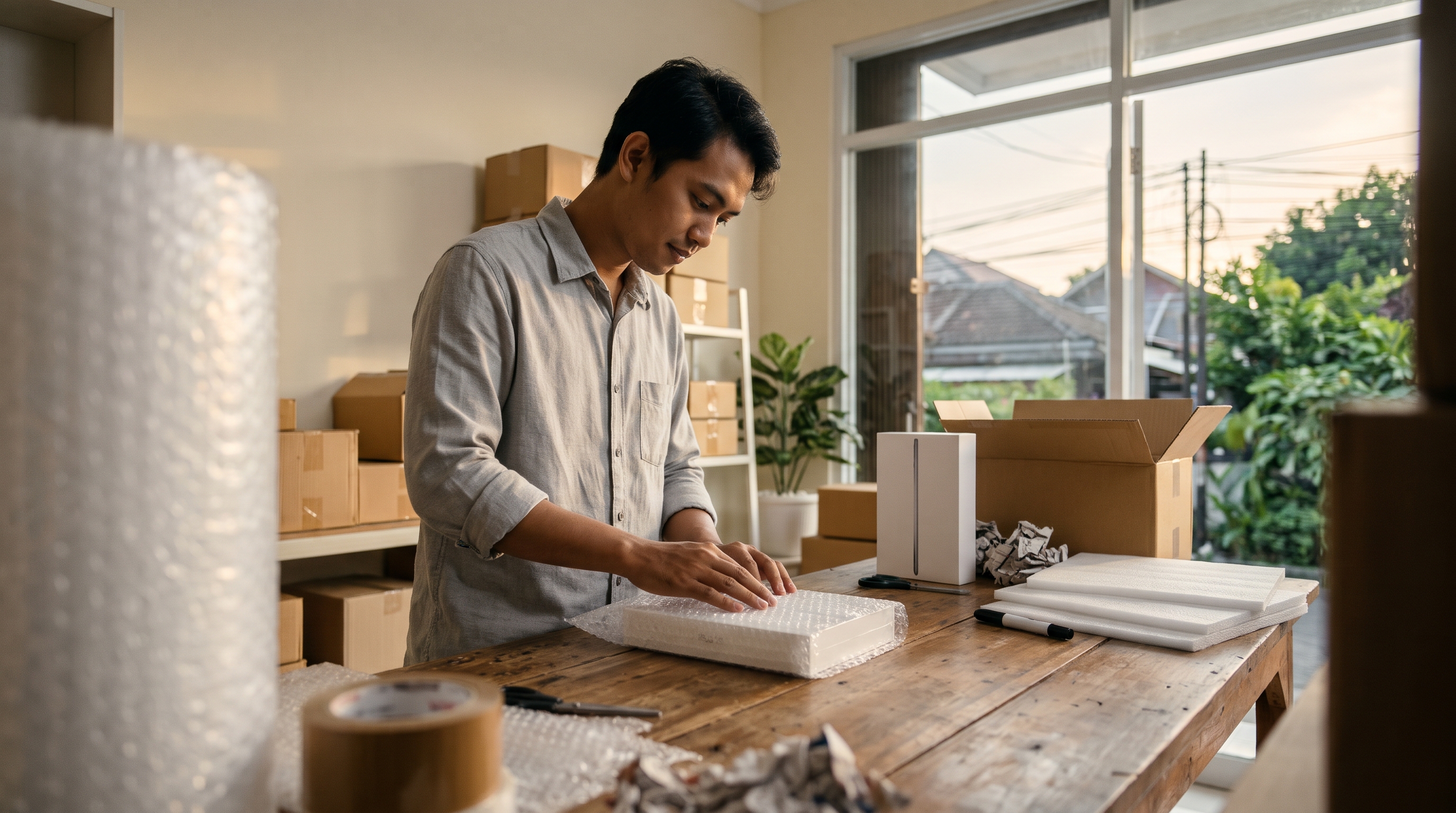
Proper packaging determines whether your shipment arrives intact or gets damaged before reaching the recipient. During long-distance shipping—whether between cities or across islands—goods may change hands 3–5 times and pass through various conditions, including vibrations during truck transportation, stacking in transit warehouses, and exposure to humid sea air.
Careless packaging significantly increases the risk of damage. Even if your goods are insured, filing a claim can still cost you valuable time and effort.
Key Takeaways:
Choose sturdy double-wall cardboard boxes for solid items and thick bubble wrap for inner protection.
Fill empty spaces inside the box to prevent items from shifting during transit.
Apply labels such as FRAGILE, DO NOT STACK, or THIS SIDE UP when necessary.
Secure the package with wide brown packing tape, covering all box seams and corners.
Check the package weight and dimensions before handing it over to the logistics provider. A crushed box can damage its contents and affect volumetric weight calculations.
What Are the Most Important Packaging Materials?
Choosing the right packaging materials is the foundation of shipment safety. Using unsuitable materials cannot be compensated for simply by applying more packing tape. Here are the essential materials you should always have available:
Material | Main Function | Suitable For |
|---|---|---|
Double-wall cardboard boxes | Outer structural protection | Electronics, ceramics, and solid goods |
Thick bubble wrap (10 mm+) | Impact cushioning | Glass, ceramics, and fragile products |
Styrofoam / foam sheets | Insulation and precise cushioning | Items sensitive to vibration |
Newspaper / kraft paper | Filling empty spaces | All types of goods |
PE plastic / stretch wrap | Moisture protection | Textiles, documents, and dry food products |
Wide brown packing tape (48 mm+) | Adhesion and seam reinforcement | All types of packaging |
Strapping bands and buckles | Reinforcement for large or heavy boxes | Machinery, furniture, and goods weighing over 20 kg |
Avoid: Using second-hand cardboard boxes that have previously been exposed to water or have dents, as their structural strength may already be significantly compromised.
What Are the Proper Steps for Packing Goods?
Proper packaging follows a specific sequence. It is not simply a matter of putting an item into a box and sealing it. Follow these steps in order:
Choose a box that fits the item. Ideally, the box's inner dimensions should be only 5–8 cm larger than the item on each side, leaving enough room for cushioning materials. An oversized box allows the item to move around too much.
Securely seal the bottom of the box. Apply at least two layers of packing tape in a cross (+) pattern across the bottom before placing anything inside.
Add a cushioning layer to the bottom. Use bubble wrap or foam at least 3–5 cm thick as the first protective layer.
Wrap each item individually. Wrap every item separately in bubble wrap, using at least three layers for fragile goods. Secure the ends with small pieces of tape to keep the wrapping in place.
Place the items inside the box and fill all empty spaces. Use kraft paper, bubble wrap scraps, or foam peanuts until there is no room for the items to shift. Gently shake the box—if you hear anything moving, add more cushioning material.
Close the box and reinforce it with packing tape. Secure all seams and corners. Use the H-taping method (two horizontal strips across the top and two along the side seams) for maximum strength.
Wrap the outside with stretch wrap. This is optional but highly recommended for valuable goods or sea freight shipments to provide extra protection against moisture and dust.
Attach the shipping label clearly. The recipient's name, full address, and phone number should be legible from a distance of approximately 50 cm. Add a FRAGILE label when necessary.
Avoid: Using thin transparent tape instead of brown packing tape to seal heavy boxes. Transparent tape can easily come loose when exposed to heat or moisture.
How Should You Pack Fragile Items and Electronic Devices?
Fragile items and electronic devices require more than just a single layer of bubble wrap for adequate protection.
For breakable items such as ceramics or glassware, wrap each item in 3–5 layers of bubble wrap, then position it upright rather than flat inside the box. An upright position is considered more resistant to vertical impacts. If shipping multiple items, place a layer of foam between each one.
For electronic devices such as laptops, tablets, or cameras, place them back in their original boxes if available. Then put the original boxes inside a shipping carton with foam or bubble wrap cushioning on all sides.
If the original packaging is unavailable, wrap the device in an antistatic bag before applying bubble wrap. This helps protect electronic components against electrostatic discharge during transit.
Avoid: Applying stickers or writing directly on the surface of electronic devices without protection. Marker ink can seep into the device's ventilation openings.
Are There Special Packaging Requirements for Sea Freight and Very Long-Distance Shipping?
Sea freight shipments to destinations outside the island face additional challenges, including high humidity, vibrations from vessel engines, and longer transit times. Under these conditions, moisture protection is essential rather than optional.
Additional steps for sea freight packaging include:
Wrap goods in PE plastic or stretch wrap before placing them inside cardboard boxes, especially metal, wooden, or textile products.
Place silica gel inside the box. One or two 50-gram sachets are generally sufficient for a medium-sized box. Silica gel absorbs moisture inside enclosed packaging during transit.
Use wooden crates for highly valuable or oversized goods. Wooden crates provide significantly better structural protection than cardboard boxes for heavy cargo.
Cover the outside of the cardboard box with a waterproof tarpaulin if the goods are not packed in wooden crates.
Customers using Sentral Cargo's sea freight services for inter-island routes are advised to discuss wooden crating requirements directly with the Customer Service team so that the shipping estimate and protective packaging method can be adjusted to their needs.
Checklist Before Handing Your Shipment Over to the Logistics Provider
Use this checklist just before handing your goods to the courier or at a drop-off point:
The cardboard box is not dented, torn, or wet.
All box seams are securely sealed with packing tape (using an H or cross pattern).
The items do not shift when the box is gently shaken.
The recipient's address label is complete and clearly legible.
FRAGILE / DO NOT STACK labels have been attached, if applicable.
The sender's and recipient's phone numbers are included.
The package weight and dimensions have been recorded for shipping cost verification.
Photos of the goods and packaging have been taken before handover.
Documentation showing the declared value of the goods is available if you intend to purchase cargo insurance.
Taking photos of your goods before handing them over to a logistics provider is a frequently overlooked step. However, these photos can serve as important evidence if you need to file a damage claim later.
Conclusion
Proper packaging is a small investment that can prevent significant losses. From choosing sturdy cardboard boxes and providing sufficient cushioning to filling empty spaces and attaching clear labels, every step contributes to keeping your shipment safe from its point of origin to the recipient's hands.
For long-distance and inter-island shipments, add moisture protection and consider using wooden crates for valuable or heavy goods.
Have you packed your goods properly? Trust Sentral Cargo to handle the delivery. We provide air, land, and sea freight services across Indonesia, complete with real-time tracking. Contact our Customer Service team via WhatsApp or check shipping rates today to get the best shipping estimate based on your route and cargo type.
FAQ
How Many Layers of Bubble Wrap Are Ideal for Fragile Items?
For fragile items such as ceramics, glassware, or porcelain, use at least 3–5 layers of bubble wrap with bubble thickness of 10 mm or more. After wrapping the item, add another layer of foam or kraft paper inside the box to prevent direct contact between the item and the box walls.
Can I Use Second-Hand Cardboard Boxes for Long-Distance Shipping?
Yes, second-hand cardboard boxes can be used as long as they remain sturdy. They should not have been exposed to water, have crushed edges, or have loose seams.
One simple way to test a box is to press its sides with both hands. If the cardboard does not collapse immediately, its structure may still be suitable for use. However, for heavy or valuable goods, using a new cardboard box is the safer option.
Do Cargo Logistics Providers Offer Packaging Services?
Some logistics providers, including Sentral Cargo, offer additional packaging services or can recommend wooden crating for certain types of cargo. Contact the Customer Service team before shipping to ensure that the packaging method is appropriate for your transportation method (air, land, or sea) and the type of goods being shipped.
What Is the Function of Silica Gel in Sea Freight Packaging?
Silica gel absorbs moisture inside sealed packaging during sea journeys, which can take several days. Without silica gel, trapped moisture inside cardboard boxes can cause metal to rust, wood and textiles to develop mold, and electronic components to become damaged.
Why Should I Photograph My Goods Before Handing Them Over to a Logistics Provider?
Photos of the goods and their packaging taken before handover serve as supporting evidence if damage occurs during shipping. These photos can strengthen cargo insurance claims and help the logistics provider investigate the incident.
The photos should include the condition of the goods, all sides of the packaging, and the shipping label.