
Blog
Package Tracking Receipt: How to Read, Track, and Resolve Common Issues
A package tracking receipt is a unique code that serves as proof of shipment and allows you to track your delivery. Learn how to read and use your tracking number, as well as resolve common tracking issues, to keep your package monitored at all times.
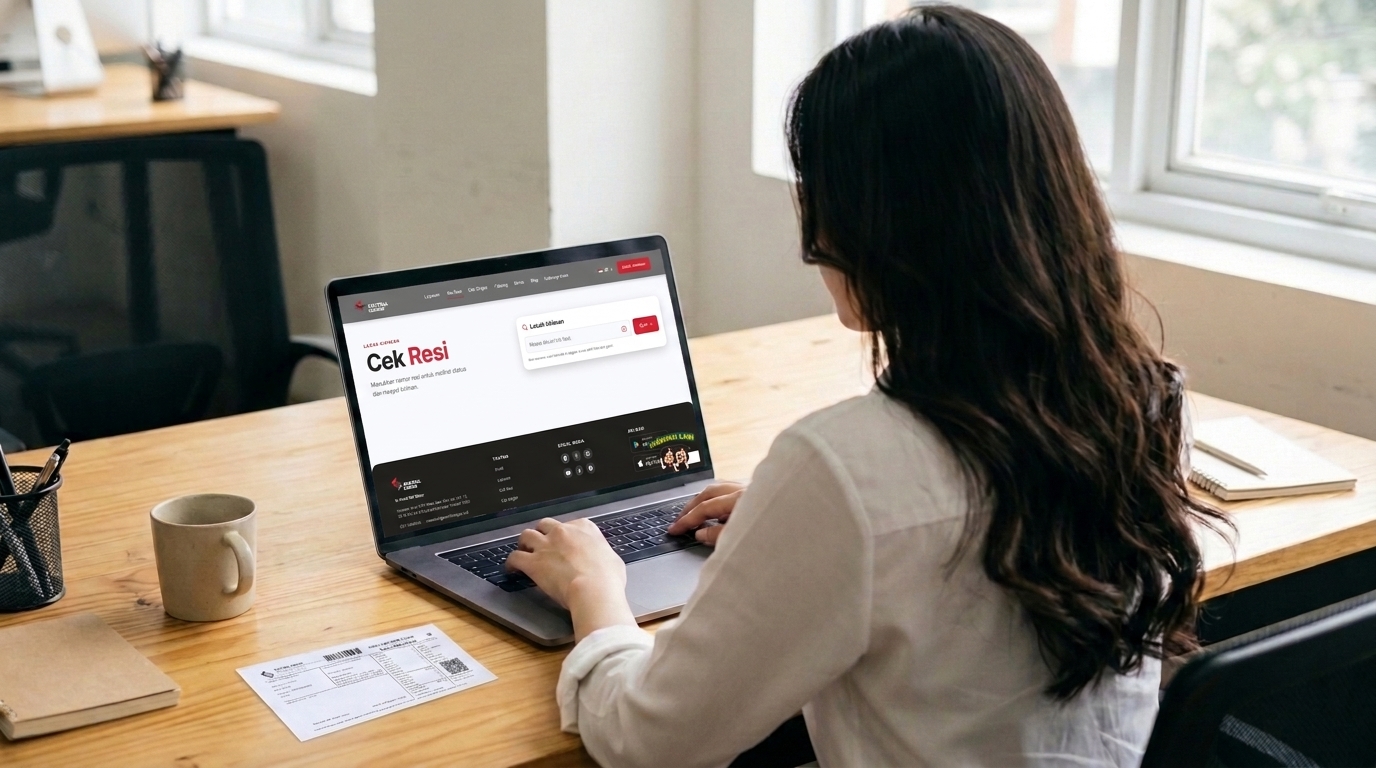
A package tracking receipt is a unique code—usually a combination of letters and numbers—issued by a shipping company when your goods are handed over and registered in its system. This code serves as a digital proof of receipt and a tracking tool that lets you monitor your shipment from its point of origin to its destination. Without a tracking number, you cannot check your package's real-time location and may have difficulty filing a claim if a problem occurs.
Key Takeaways:
A package tracking receipt is a unique shipment receipt number issued by the shipping company when your goods are received.
It is used to track shipment status in real time through a website, mobile app, or WhatsApp customer service.
Tracking number formats vary between shipping companies. Cargo tracking numbers are generally longer and may include codes indicating the shipping method (air, sea, or land).
A tracking number that has not been updated does not necessarily mean your package is lost. There are several technical reasons for delays, many of which can be resolved.
Keep your tracking number until the package has been received and any claims have been settled. It serves as legal proof of your shipment.
What Is a Package Tracking Receipt and Why Is It Important?
A package tracking receipt is a document or identification code that proves your goods have been officially registered in a shipping company's system. Its function is similar to an ATM receipt: it serves as proof of a transaction and can be used to track what happens next. In logistics, a tracking receipt is also known as a waybill, an AWB (Air Waybill) for air freight, or a BL (Bill of Lading) for sea cargo.
For both senders and recipients, a tracking number serves three main purposes:
Tracking shipment locations — Find out which city your shipment has reached or which transit warehouse it is currently at.
Proof of shipment — Required if a dispute arises between a seller and buyer on an online marketplace.
Supporting claims — Shipping companies will not process loss or damage claims without a valid tracking number.
What Does a Package Tracking Number Usually Look Like?
Tracking number formats vary depending on the shipping company and the shipping method used. In general, tracking numbers consist of 10–20 alphanumeric characters. Some shipping companies add prefixes to indicate the shipping method.
Shipping Method | Example Code or Prefix | Typical Length |
|---|---|---|
Air Freight | AWB / letters + numbers | 10–12 characters |
Sea Freight | BL / MAWB | 12–16 characters |
Land Freight (Trucking) | Varies by shipping company | 10–15 characters |
Regular Parcel Delivery | JNE, SiCepat, etc. | 20–25 characters |
For cargo services such as Sentral Cargo, a tracking number is issued once the weighing process and data entry have been completed. This applies whether you drop off your shipment at a branch or use the free cargo pickup service. Keep this number somewhere safe as soon as you receive it.
How to Track a Package Correctly
You can track a package through several channels, depending on the shipping company you use. Here are the general steps:
Prepare your tracking number — Make sure there are no extra spaces, incorrect uppercase or lowercase letters, or missing characters.
Open an official tracking channel — Use the shipping company's website, mobile app, or customer portal tracking feature.
Enter your tracking number in the available field and click Track or Check Status.
Read the shipment status — Check the latest recorded location and the date and time of the update.
Contact customer service if the status has not changed for more than 2 × 24 hours or an unfamiliar status appears.
Sentral Cargo customers can track shipments through the Sentral Cargo Customer Portal, which displays a complete shipment movement history, or through the Sentral Cargo mobile app.
What Do Common Tracking Statuses Mean?
Reading tracking updates can be confusing if you are unfamiliar with the terminology. Here are some common shipment statuses you should know:
Manifested / Entry — The tracking information has been entered into the system, but the goods have not yet undergone further processing.
Picked Up / On Hand — The goods have been collected or received at the origin warehouse.
In Transit — The goods are on their way, either in a vehicle or at a transit warehouse.
On Delivery / Out for Delivery — The courier is delivering the goods to the destination address.
Delivered — The goods have been received at the destination.
Returned / RTS (Return to Sender) — The goods are being returned to the sender, usually because the address could not be found or the recipient refused the delivery.
Do not panic if your shipment remains in Manifested status during the first 24 hours. Scanning and system updates take time, especially for inter-island shipments.
Why Has Your Tracking Number Not Been Updated? Causes and Solutions
A tracking number that remains unchanged or shows no new updates does not necessarily mean there is a problem with your package. Several common technical issues can cause tracking delays.
Common Reasons for Tracking Updates Being Delayed:
The goods are traveling a long distance by sea or land and have not yet reached the next scanning point.
There is a delay in system updates at the transit warehouse.
The tracking server is experiencing technical issues.
The tracking number was entered incorrectly during the tracking process.
How to Resolve the Issue:
Wait 1–2 business days, especially for inter-island shipments transported by sea or land.
Check that the tracking number you entered is correct. Copy it directly from the original source.
Use the shipping company's official tracking channels rather than third-party tracking websites, which may experience synchronization delays.
If there are no updates for more than 3 business days, contact the shipping company's customer service team and provide your tracking number, shipping date, and destination route.
What Should You Do If Your Tracking Receipt Is Lost or Never Received?
Losing a tracking receipt can become a serious issue, especially if your package has not arrived and you need to file a claim. Here are some steps you can take:
Check your email or WhatsApp messages — Shipping companies usually send tracking confirmations digitally.
Contact the sender — If you are the recipient, ask the sender for the tracking number.
Show your payment confirmation to the shipping company's customer service team. A bank transfer receipt or proof of payment for shipping services can help the internal team locate your shipment details.
Keep a photo of the physical receipt — If the shipping company issues a printed receipt, take a photo of it before putting it away.
As a preventive measure, make it a habit to request a digital receipt whenever you hand over goods to a shipping company.
Conclusion
A package tracking receipt is essential for every shipping transaction. It is more than just a combination of numbers and letters—it serves as legal proof of shipment and a tracking tool that protects your rights as both a sender and recipient.
Understanding how to read your tracking number, recognizing the meaning of each shipment status, and knowing how to resolve common tracking issues can make the shipping process much less stressful.
Sentral Cargo provides an easy-to-access, real-time tracking system so you can monitor your package at any time until it reaches its destination.
Want to check shipping rates or get started with a shipment? Contact the Sentral Cargo team via WhatsApp today for a free consultation.
FAQ
Is a package tracking number the same as an AWB number?
In terms of function, yes. AWB (Air Waybill) is the specific term for a tracking number used in air freight shipments. Meanwhile, terms such as receipt, tracking number, or tracking code are commonly used for all shipping methods, including land and sea freight.
How long after shipping does a package tracking number become active?
Tracking numbers generally become active and can be tracked within 2–6 hours after the shipping company receives the goods and processes them at its warehouse. For large-volume cargo shipments, data entry may take up to 24 hours, especially on busy shipping days.
Can one shipment have more than one tracking number?
Yes, especially when a shipment is divided into several separate packages or pieces. For cargo shipments, each large package or piece of cargo entered separately into the system will receive its own tracking number. Make sure you keep all the tracking numbers issued for the shipment.
My tracking status shows “Returned.” What should I do?
A Returned or Return to Sender status means the package is being returned or has already been returned to the sender. Contact the shipping company's customer service team immediately to find out why. Common reasons include an incomplete address, an unavailable recipient, or an inactive phone number. Once the goods have been returned, you can arrange to resend them using the corrected address details.
Is a tracking number required to file a shipping insurance claim?
Yes. A tracking number is a primary requirement when filing a claim. Without it, the shipping company cannot verify that the goods covered by the claim were registered in its shipping system. Make sure you keep your tracking receipt until the entire claims process has been completed.