
Blog
Packing Goods During the Rainy Season: Protect Shipments from Moisture and Water Damage
The rainy season increases the risk of shipments getting wet, damp, or damaged in transit. Follow these specialized packing tips to keep your goods safe until they reach their destination.
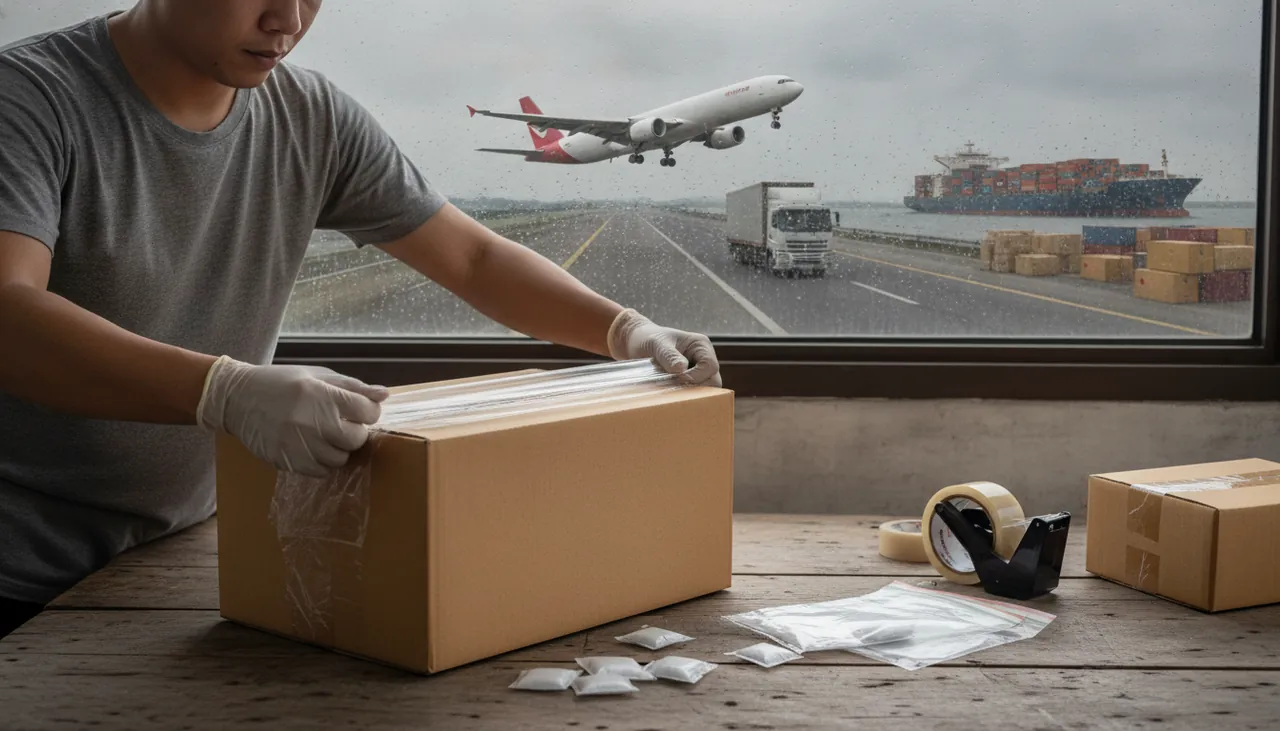
Packing goods during the rainy season requires additional protective layers because moisture and rainwater can penetrate ordinary cardboard packaging within minutes. Goods shipped by land or sea are at risk of exposure to water splashes, condensation, and humid air during transit, which can last anywhere from several hours to several days. With the right packing techniques and suitable materials, your shipments can remain dry and safe even in unfavorable weather conditions — including inter-island deliveries that take several days.
Summary:
Wrap the contents in PE plastic or ziplock bags before placing them inside the cardboard box.
Use thick, double-wall cardboard boxes and cover the exterior with stretch wrap or waterproof plastic wrapping.
Add silica gel inside the packaging to absorb any remaining trapped moisture.
Seal all cardboard joints with strong, clear packing tape — using at least two overlapping layers.
Place a clearly visible "KEEP DRY" label on all sides of the package.
Why Does the Rainy Season Increase Shipping Risks?
Humidity and rainwater are two major threats to shipments during the rainy season, and both can damage goods even without direct contact with water. Ordinary cardboard absorbs moisture from the air within hours, potentially losing up to half of its structural strength before eventually collapsing or leaking under the pressure of other stacked packages.
Some common conditions during rainy-season transit include:
Direct water splashes during outdoor loading and unloading or at docks.
Condensation forming inside containers or truck beds due to temperature differences.
High humidity aboard sea vessels, especially on inter-island routes crossing open waters.
Standing water in transit warehouses or loading dock areas.
Stacking wet goods, which can cause packages underneath to become damp as well.
These risks are significantly higher for sea freight shipments — including routes used by PT Pelni for inter-island cargo services — because transit times can reach 3–14 days, depending on the route and vessel.
Best Packing Materials for the Rainy Season: What Should You Prepare?
Choosing the right packing materials is the foundation of protecting your shipments during the rainy season. Not all protective materials offer the same level of protection — choose them based on the type of goods, shipping route, and transit duration.
List of Waterproof Packing Materials
Material | Main Function | Suitable For | Protection Level |
|---|---|---|---|
PE Plastic (Polyethylene) | Primary waterproof layer | All types of goods | ⭐⭐⭐⭐⭐ |
Thick Ziplock Bags | Wrapping small items and documents | Electronics, documents, clothing | ⭐⭐⭐⭐⭐ |
Stretch Wrap (Plastic Wrapping) | Outer layer for cardboard boxes | All cardboard packages | ⭐⭐⭐⭐ |
Double-Wall Cardboard (2 Layers) | Main packaging structure | Medium to heavy goods | ⭐⭐⭐⭐ |
Bubble Wrap | Cushioning and light water protection | Fragile and breakable items | ⭐⭐⭐ |
Silica Gel | Absorbs moisture inside packaging | Electronics, sensitive goods | ⭐⭐⭐⭐ |
Wide Clear Packing Tape (48 mm+) | Seals all packaging joints | All types of packaging | ⭐⭐⭐⭐ |
Plastic Sack / Woven Bag | Additional outer protective layer | Large items / heavy cargo | ⭐⭐⭐⭐ |
Tips for Choosing Cardboard: Choose cardboard with a minimum thickness of 5-ply (double-wall). You can test it by pressing the surface of the box. If it dents immediately, the cardboard is too thin for rainy-season shipping.
Step-by-Step Guide to Properly Packing Goods During the Rainy Season
Effective waterproof packing uses a three-layer protection system: the inner layer (protecting the goods), the middle layer (main packaging), and the outer layer (protection from environmental conditions). Follow these steps in order for the best results.
Rainproof Packing Guide: 10 Steps
Make sure the goods are completely dry before packing. Never pack items that are still damp or wet because moisture will become trapped inside.
Wrap the goods in PE plastic or ziplock bags as the first protective layer. For electronic items, use at least two layers of PE plastic and secure or seal them with a heat sealer.
Add bubble wrap over the PE plastic for fragile or breakable items, then secure it with packing tape.
Add silica gel inside the plastic packaging before sealing it. A quantity of 10–50 grams per package is sufficient for medium-sized goods. For high-value electronics, use 50–100 grams.
Prepare a dry double-wall cardboard box. If the cardboard feels slightly damp, air-dry it before use.
Line the inside of the cardboard box with PE plastic sheeting before placing the goods inside. This creates a waterproof barrier within the box to prevent water from seeping in from outside.
Place the wrapped goods inside the cardboard box and fill any empty spaces with cushioning materials (kraft paper, foam sheets, or pieces of bubble wrap) to prevent movement.
Close the box and seal all joints with wide clear packing tape measuring at least 48 mm. Apply an H-seal pattern (tape across the center, both upper edges, and both lower edges). Do not rely on just a single straight strip of tape across the middle.
Wrap the entire cardboard box with stretch wrap for at least 3–4 rotations. Make sure there are no exposed gaps, including at the corners.
Attach labels on top of the stretch wrap: the recipient's name and address (laminated or placed inside clear plastic), along with a "KEEP DRY" label on at least two different sides.
Special Packing Instructions Based on Goods Type
Different types of goods require different levels of protection. Electronics, for example, need different packaging from textiles or dry food products.
Electronics and Gadgets
Electronics are among the most vulnerable items to moisture because water damage is not always immediately visible but can cause permanent problems. Use at least three protective layers: PE plastic → anti-static bubble wrap → double-wall cardboard → outer stretch wrap. Add 50–100 grams of silica gel and consider shipping insurance for items valued above IDR 1 million.
Clothing and Textiles
Damp clothing does not necessarily become damaged immediately, but it is susceptible to mold if left inside the packaging for too long. Place clothing in ziplock bags or sealed plastic bags, then pack them in cardboard boxes or suitcases. Silica gel is still recommended for shipments taking more than 3 days.
Documents and Paper Products
Documents should first be placed inside waterproof plastic folders, followed by bubble wrap envelopes, and finally thick ziplock bags. For important documents, use PVC tubes or rigid boxes as outer packaging.
Dry Food and Grocery Products
Dry food products such as coffee, flour, and spices easily absorb moisture and are susceptible to mold. Use tightly sealed food-grade plastic packaging, then place the products inside cardboard boxes lined with plastic on the inside. Food-grade silica gel should also be added.
Large Items and Heavy Cargo
For large items that do not fit into standard cardboard boxes, use woven sacks or tarpaulins as additional outer protective layers. Secure them with plastic rope and make sure no sections are left exposed. If using pallets, wrap the entire load with stretch wrap from the bottom to the top.
Most Common Rainy-Season Packing Mistakes
Common packing mistakes are not necessarily caused by a lack of knowledge, but rather by overlooking small details that can become the most vulnerable points for water leaks. Avoid the following mistakes:
❌ Only covering the outside of the cardboard box without an inner protective layer — water seeping through the joints can still reach the goods.
❌ Using previously wet cardboard boxes — such boxes lose their structural strength and cannot return to their original condition even after drying.
❌ Applying only one layer of tape across the center — gaps at the corners and edges are among the most commonly overlooked entry points for water.
❌ Not attaching a "KEEP DRY" label — without this label, warehouse staff may not realize that the goods require special handling.
❌ Placing silica gel directly on the surface of goods without a plastic barrier — some types of silica gel may leave stains when they come into direct contact with products.
❌ Ignoring condensation — items that are too cold (for example, recently taken out of a refrigerator or an air-conditioned room) may develop condensation when exposed to warm air. Allow them to reach room temperature before packing.
❌ Using only 1–2 layers of stretch wrap — this layer may be too thin to withstand heavy rain during loading and unloading.
When Should You Consider Additional Shipping Insurance?
Shipping insurance is highly recommended when goods are valuable, shipping routes are long, or extreme weather conditions are occurring. Even the best packing methods cannot guarantee 100% protection against every possible risk — from vehicle accidents and flooded warehouses to handling errors.
Consider purchasing insurance if:
The goods are valued above IDR 500,000.
Shipments are sent by sea or air with transit times exceeding 2 days.
The goods are sensitive items (electronics, instruments, antiques).
The rainy season is experiencing extreme conditions or there are weather warnings issued by the Indonesian Ministry of Transportation.
Ask the Sentral Cargo team about available shipping insurance options when placing your order. Do not wait until after the goods have been shipped.
Rainy-Season Packing Checklist Before Handing Over Goods to the Freight Forwarder
Use this checklist as a final inspection before handing your package over to the courier or drop-off point:
Goods have been wrapped in PE plastic or ziplock bags as the first protective layer.
Silica gel has been placed inside the packaging.
The cardboard box is double-wall and in dry condition.
The inside of the cardboard box is lined with plastic sheeting.
Empty spaces inside the box have been filled with cushioning materials.
All cardboard joints have been sealed with at least two layers of clear packing tape (H-seal pattern).
The entire cardboard box has been wrapped with at least 3–4 layers of stretch wrap.
The recipient's label has been laminated or placed inside clear plastic.
A "KEEP DRY" label is attached to at least two sides.
Shipping insurance has been confirmed (for high-value goods).
Photos of the packed goods have been taken as documentation in case a claim is necessary.
Packing for Different Shipping Methods: Which Is the Riskiest?
The risk of water exposure varies depending on the shipping method you choose. Understanding these differences helps you determine how much additional protection your goods require.
Land Freight carries a moderate level of risk. Goods are generally transported inside covered truck compartments, but loading and unloading at transit warehouses often take place in open areas. Standard three-layer packaging is sufficient for most land shipments.
Air Freight has the lowest risk of water exposure because handling procedures are more controlled and transit times are significantly shorter. However, condensation can still occur in aircraft cargo compartments due to temperature differences, making PE plastic protection necessary.
Sea Freight carries the highest risk because of longer transit times, exposure to highly humid sea air, and loading and unloading activities at ports that often take place during rainfall. For this shipping method, additional protective layers such as woven sacks or tarpaulins are highly recommended in addition to standard packaging.
Conclusion
Properly packing goods during the rainy season is not simply about wrapping cardboard boxes in plastic. It involves a layered protection system that starts with the goods themselves and extends to the outermost packaging layer. The key is to protect from the inside, reinforce in the middle, and shield from the outside. Use the right materials, seal everything properly, and always attach a "KEEP DRY" label to encourage more careful handling during transit. Your goods are too valuable to be damaged during shipping simply because the packaging was not prepared for the rainy season.
Ready to ship your goods safely this rainy season?
The Sentral Cargo team is ready to help you determine the best shipping method — air, land, or sea — based on your goods, destination, and budget. Check shipping rates or contact our Customer Service team via WhatsApp for a free consultation before shipping.
FAQ
Is Stretch Wrap Alone Sufficient for Rain Protection?
Stretch wrap helps repel water from the outside, but it is not sufficient as the only protective layer. Water can still enter through gaps or small tears, especially if other objects are stacked on top of the goods during transit. Always combine stretch wrap with an inner PE plastic layer inside the cardboard box for more reliable protection.
How Much Silica Gel Is Needed for One Shipment Package?
As a general guideline, use 10–30 grams of silica gel for small packages (under 1 kg), 30–50 grams for medium-sized packages (1–5 kg), and 50–100 grams or more for large packages or high-value electronics. These quantities can be adjusted if the packaging is particularly large or the shipping route is very long.
Can Used Cardboard Boxes Be Used for Shipping During the Rainy Season?
Used cardboard boxes can be used as long as they remain structurally strong, have never been exposed to water, and have no structural folds or tears. Cardboard that has previously been wet — even after drying — can lose up to 70% of its strength and is not recommended for shipping, especially during the rainy season. If in doubt, use new double-wall cardboard boxes.
How Can I Make Waterproof Labels That Will Not Smudge in the Rain?
The most practical method is to print or write the label, laminate it with thick clear adhesive tape, and then attach it on top of the stretch wrap. Alternatively, place the label inside a small ziplock bag and attach it to the outside of the package. Avoid writing directly on cardboard with a marker without protection, as the ink may run when exposed to water.
Does Sentral Cargo Provide Special Packing Services for the Rainy Season?
Sentral Cargo provides shipping services with various packaging protection options. For detailed information about available packing services and insurance options, you can contact our Customer Service team directly via WhatsApp. Our team is available every day to help you choose the shipping solution that best suits your needs.