
Blog
How to Ship Goods to Remote Areas: Shipping Solutions for Indonesia's Most Remote Regions
Shipping goods to remote areas is no longer impossible. Discover a complete guide to choosing the right shipping method to ensure your shipments arrive safely and on time.
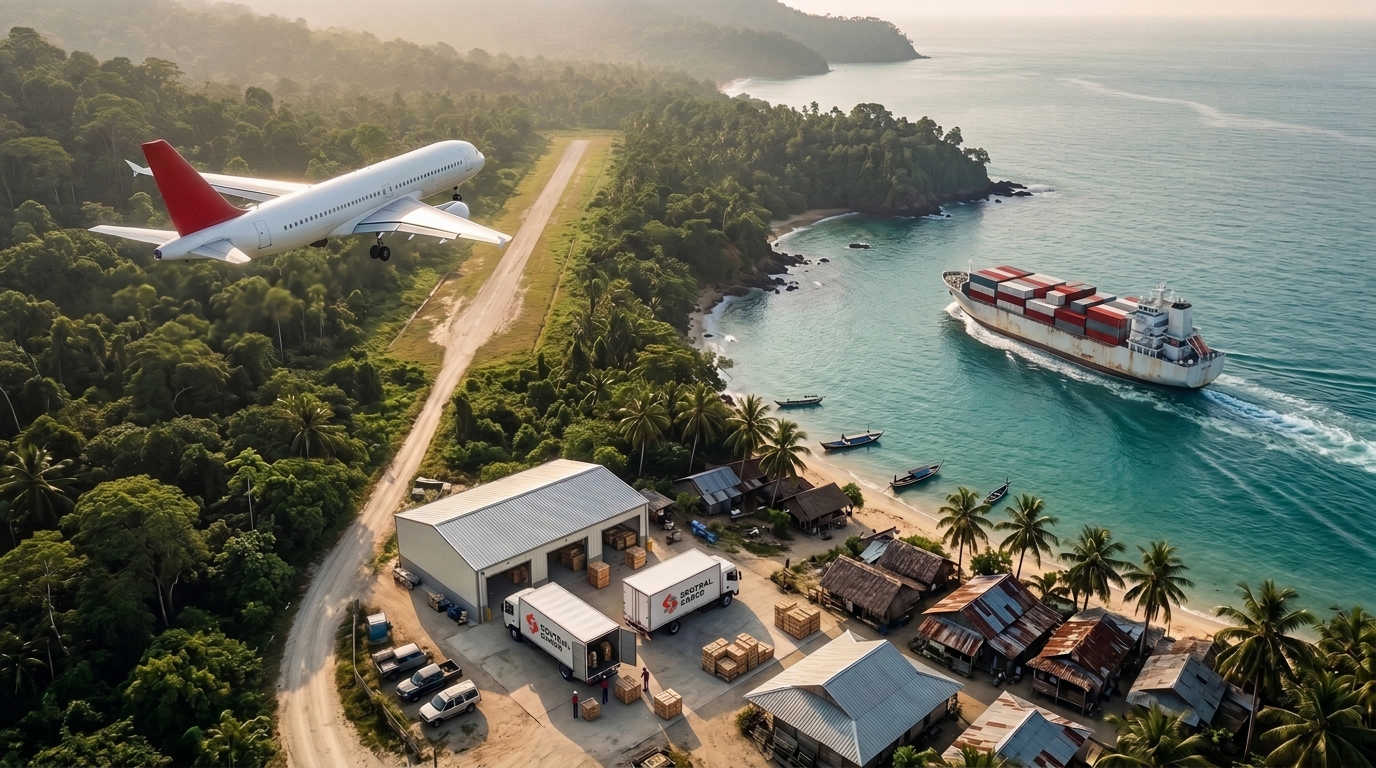
Shipping goods to major cities such as Jakarta, Surabaya, or Medan may seem straightforward. But what if your destination is a remote area, an isolated island, or a region with developing infrastructure? For many online sellers, SMEs, and individuals, this presents a real challenge that often leads to several questions: Which shipping company can reach the destination? How long will delivery take? And how much will it cost?
This article provides practical and straightforward answers to these questions.
Why Is Shipping to Remote Areas More Complex?
Remote areas — such as the inland regions of Kalimantan, small islands in Maluku, mountainous areas of Papua, or villages across Nusa Tenggara — have different conditions compared to major cities:
Limited road infrastructure, meaning not all types of vehicles can access these areas.
Limited airport availability, restricting the use of air freight services.
Limited vessel and flight schedules, making shipping schedules less flexible.
Limited local shipping agents, meaning shipments may need to transit through the nearest major city.
Understanding these conditions is essential to setting realistic expectations and choosing the right shipping strategy.
Three Shipping Methods and Their Suitability for Remote Areas
1. Air Freight — The Fastest Option, but Requires Airport Access
If your destination has an operational airport, no matter how small, air freight can be the best option in terms of speed. Air cargo can reach islands that are geographically far from Java within 1–3 business days.
Air freight services are particularly suitable for:
High-value goods that need to arrive quickly.
Urgent documents or spare parts.
Food or pharmaceutical products with limited shelf life.
However, keep in mind that not all remote areas have operational airports. In such cases, shipments are usually delivered to the nearest accessible city before continuing by land or sea.
2. Sea Freight — A Cost-Effective Solution for Large Shipments
For inter-island shipments involving large quantities or heavy and oversized goods, sea freight via Pelni or Roro vessels is the most economical option. This shipping method is particularly relevant for destinations such as the islands of Maluku, East Nusa Tenggara (NTT), eastern Sulawesi, and Papua.
The advantages of sea freight include:
Significantly lower costs compared to air freight, especially for large shipments.
The ability to transport various types of goods, including motor vehicles, large furniture, and industrial machinery.
Extensive coverage, with Pelni vessels serving hundreds of ports across Indonesia.
The trade-off is a longer delivery time, generally ranging from 20-24 days depending on the route and vessel schedule. Proper planning is essential to avoid unnecessary delays.
3. Land Freight — A Reliable Option for Destinations on the Same Island
If your remote destination is located on the same island as the point of origin — for example, shipping from Jakarta to villages in the inland regions of Sumatra or Kalimantan — land freight using trucks can be a reliable option.
Intercity trucking offers relatively flexible routes, although certain inland routes may require specialized vehicles or a relay delivery system, where shipments are transferred between local transportation partners.
Practical Tips for Smooth Shipping to Remote Areas
Confirm Delivery Coverage Before Shipping
The first step you should never overlook is checking directly with your shipping provider to confirm whether your destination can be reached directly or requires additional last-mile delivery services.
Some areas may only be accessible up to the nearest district or regency, requiring further transportation arrangements.
Use Stronger Packaging
Deliveries to remote areas often involve multiple transit points and challenging road conditions. Make sure your goods are properly packed using:
Multiple layers of bubble wrap for fragile items.
Wooden crates for heavy goods or expensive electronics.
Strong packing tape and clear, waterproof shipping labels.
Consider Shipping Insurance
For high-value goods, shipping insurance is more than just an option — it is an important precaution. Cargo insurance premiums are generally affordable compared to the potential risks of loss or damage, especially on long-distance shipping routes.
Take Advantage of Tracking Services
Make sure your shipping provider offers real-time tracking so you can monitor your shipment at every stage of its journey.
This is particularly helpful when delays occur at transit points and you need to provide updates to the recipient.
Plan Your Shipments in Advance
Ships and pioneer flights serving remote areas often operate on limited schedules — sometimes departing only a few times a week.
Ship your goods well ahead of the required delivery date to avoid missing the next available departure schedule.
Online Sellers: Set Realistic Delivery Estimates
If you sell products through online marketplaces and have customers in remote areas, it is important to:
Avoid promising unrealistically short delivery times. Allow sufficient buffer time to prevent customer disappointment.
Communicate shipping conditions to customers from the beginning, including possible transit points and longer estimated delivery times.
Choose a shipping provider with a proven track record on non-standard routes, rather than simply choosing the cheapest option.
Sellers who communicate shipping expectations transparently are more likely to receive positive customer reviews, even when deliveries take longer than usual.
The Role of National Shipping Companies in Reaching Remote Areas Across Indonesia
National shipping companies with extensive networks and years of experience play an important role in ensuring that goods can reach destinations throughout Indonesia.
By combining three transportation methods — air, sea, and land — shipments to remote areas can be handled through a structured delivery process. For example, goods can be transported by air to the nearest airport before continuing by land to the final village destination.
Sentral Cargo, which has been operating since 2007, provides shipping services to various destinations across Indonesia through these three transportation methods.
Equipped with real-time tracking and a customer portal, you can monitor your shipments throughout their journey without having to repeatedly contact Customer Service.
With a minimum shipment weight of 5 kg, Sentral Cargo is suitable for both individual shipping needs and large-scale business shipments.
FAQ
Can cargo shipping services reach all remote areas in Indonesia?
Not all remote areas can be reached directly. Some highly isolated locations can only be served up to the nearest city or district, after which shipments must be delivered by local agents or collected by the recipient.
It is best to confirm delivery coverage with your shipping provider before arranging the shipment.
Which shipping method is recommended for sending goods to remote islands?
It depends on the type of goods and delivery urgency.
For lightweight and urgent shipments, air freight is the best option if an airport is available. For large or heavy shipments with more flexible delivery schedules, sea freight via Pelni vessels is significantly more economical.
How long does shipping to remote areas in Papua or NTT take?
Delivery estimates can vary considerably, ranging from 5 days to more than 3 weeks, depending on the shipping method and available vessel or flight schedules.
Planning your shipment well in advance is highly recommended.
Is shipping insurance necessary for deliveries to remote areas?
Yes, shipping insurance is highly recommended, especially for high-value goods.
Long-distance routes involving multiple transit points can increase the risk of damage or loss. Cargo insurance costs are generally low compared to the value of the goods being protected.
How can I check shipping rates to remote areas?
Contact the shipping company's team directly via WhatsApp or use the shipping cost calculator available on your chosen shipping provider's website.
Provide complete information, including package weight, dimensions, and destination city, to get a more accurate shipping cost estimate.
Shipping goods to remote areas requires more preparation than delivering to major cities. However, with the right shipping method, proper packaging, and an experienced logistics partner, your shipments can still arrive safely at their destinations.
Want to know the estimated shipping costs to your destination?
Contact the Sentral Cargo team via WhatsApp today for a free consultation and shipping rate estimates to destinations across Indonesia!