
Blog
How Long Does Cargo Shipping Take? A Guide to Delivery Estimates by Shipping Method
Cargo shipping times vary depending on the shipping method and route. This guide provides realistic delivery estimates for air, land, and sea freight, along with the factors that affect transit times.
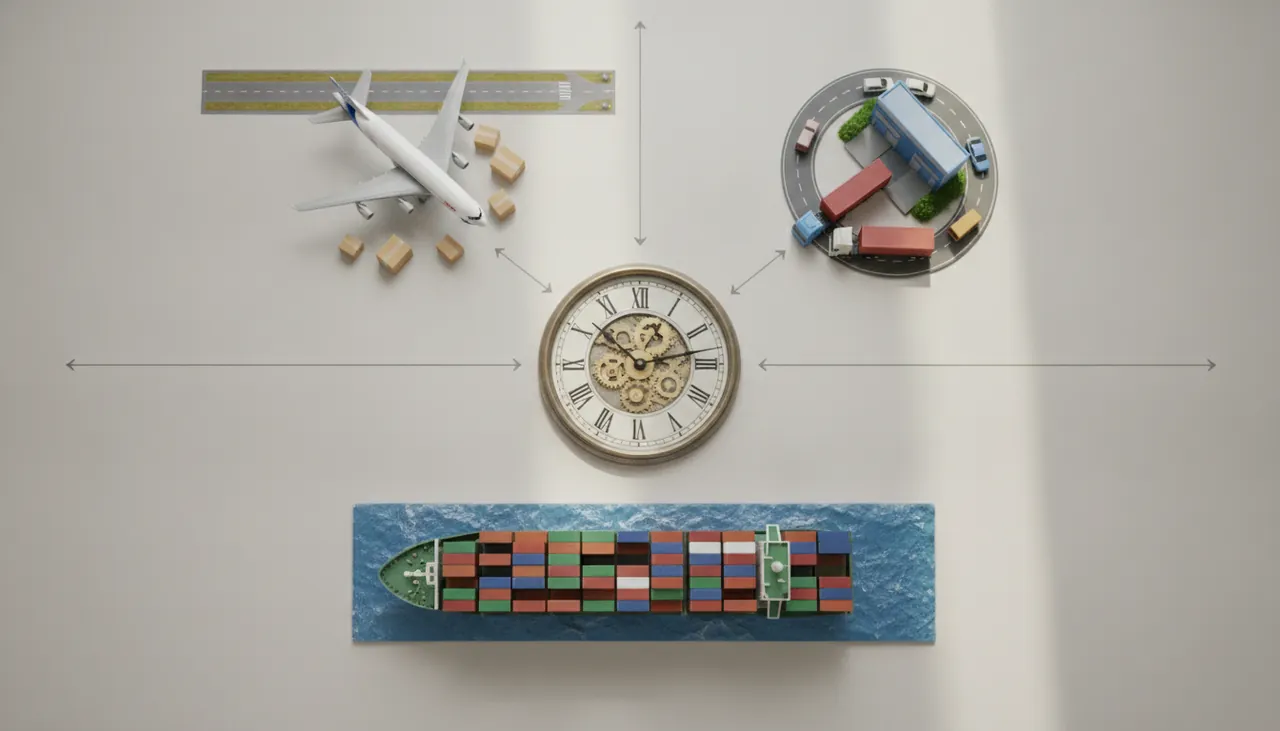
Cargo Shipping Time Estimates: How Long Does Delivery Take by Air, Land, and Sea?
Cargo shipping time estimates depend heavily on the shipping method selected: air freight generally takes 1–3 business days, land freight takes 1–5 business days depending on distance, and sea freight takes 3–14 business days depending on the inter-island route. These figures are general guidelines, not absolute guarantees, as several operational factors can shorten or extend actual delivery times.
Summary:
Air freight: 1–3 business days, suitable for urgent shipments to cities with airports.
Land freight: 1–5 business days, depending on distance and road conditions.
Sea freight: 3–14 business days, the most economical option for large inter-island shipments.
Transit times may increase due to handling processes, weather conditions, or vessel and aircraft schedules.
Choose a shipping method based on urgency, shipment weight, and shipping budget.
Why Do Cargo Shipping Time Estimates Vary?
Cargo shipping time is not calculated based on travel distance alone. It covers the entire shipping process: pickup → sorting at the origin warehouse → transportation and transit → processing at the destination warehouse → final delivery to the recipient. Each stage has its own time window.
Several key factors affect delivery duration:
Departure schedules — Pelni vessels and cargo aircraft operate on fixed schedules. If goods arrive after the cut-off time, the next departure may be 1–2 days later.
Handling and documentation processes — Heavy or oversized cargo requires special handling, which can slow down loading.
Weather and road conditions — The rainy season, flooding, and heavy fog can disrupt all shipping methods.
Destination location — Major cities with direct access are generally faster to reach than areas requiring transshipment.
National holidays — Shipping company operations are usually reduced during holidays, so delivery estimates may need an additional 1–2 days.
Cargo Shipping Time Estimates by Shipping Method
The following table compares realistic delivery estimates across different route categories. These figures are general estimates under normal conditions. Contact your shipping company to confirm the exact estimate for your specific route.
Shipping Method | Sample Route | Estimated Transit Time | Notes |
|---|---|---|---|
Air freight | Jakarta → Makassar | 1–2 days | Depends on cargo flight frequency |
Air freight | Jakarta → Jayapura | 2–3 days | Limited connections, with transit in Makassar |
Land freight | Jakarta → Bandung | 1 day | Direct route, light vehicles |
Land freight | Jakarta → Surabaya | 2–3 days | Trans-Java Toll Road, regular truck fleet |
Land freight | Jakarta → Medan (via ferry) | 4–5 days | Includes the Merak–Bakauheni ferry crossing |
Sea freight | Jakarta → Surabaya | 3–4 days | Via regular cargo vessels |
Sea freight | Jakarta → Makassar | 5–7 days | Standard Pelni route |
Sea freight | Jakarta → Sorong | 10–14 days | Long route with limited schedules |
All figures are estimates, not guaranteed delivery times. Request official delivery estimates when booking.
How Long Does Air Freight Take?
Air freight is the fastest shipping method because cargo aircraft can fly directly to destination airports without road infrastructure constraints. For major routes such as Jakarta–Surabaya or Jakarta–Makassar, goods can arrive within 1–2 business days after being received at the shipping company's warehouse.
However, it is important to understand that air freight speed is heavily affected by the shipping cut-off time — generally between 10:00 AM and 12:00 PM Western Indonesia Time (WIB) for same-day departures. Goods received after this deadline will only be shipped the following day.
To learn more about when air freight is the best option, read our guide on when to use air freight.
How Long Does Land Freight Take?
Land freight via trucking offers route flexibility because it can reach cities without airports or major seaports. Delivery generally takes 1–5 business days, depending on distance and road conditions.
Here are some important points about land freight:
Short distances (under 300 km): Usually 1 business day, for example, Jakarta–Bandung or Jakarta–Cirebon.
Medium distances (300–800 km): 2–3 business days, such as Jakarta–Semarang or Jakarta–Yogyakarta.
Long distances (over 800 km within one island): 3–5 business days, including routes such as Jakarta–Surabaya or Medan–Palembang.
Routes involving ferry crossings: Add 4–8 hours for waiting and crossing time, for example, Java–Bali or Java–Sumatra.
Avoid relying on land freight estimates without accounting for long holiday periods, as traffic congestion on major routes can significantly increase delivery times.
How Long Does Sea Freight Take?
Sea freight generally has the longest delivery estimates, but it is the most economical option for large and heavy shipments. Transit time typically ranges from 3–14 business days, depending on the route and vessel schedule.
Several factors that sea freight shippers often overlook include:
Vessel departure frequency: Not all routes are served daily. Routes to regions in eastern Indonesia, including Kalimantan and Sulawesi, may operate 2–3 times a week, so waiting time for the next departure must be taken into account.
Loading and unloading at ports: At major ports such as Tanjung Priok or Makassar, loading and unloading queues can add 1–2 days.
Transshipment: Goods shipped to smaller islands often need to be transferred to another vessel at a transit port, adding 1–3 days.
For official vessel schedule information, you can check PT Pelni's fleet schedules as a reference for domestic sea routes.
Hidden Factors That Often Delay Shipments
Many shippers become frustrated when goods arrive late without understanding the reasons behind the delay. The following factors are often overlooked:
Incomplete documentation: Incorrect delivery notes or invoices can delay processing at inspection points, especially for inter-island shipments.
Non-standard packaging: Goods that need to be repacked because they are damaged or do not meet the requirements of a particular shipping method can slow down the sorting process. Make sure your packaging is prepared correctly before handing over your goods to the shipping company. See our guide to damage-resistant cargo packaging.
Incorrect reported weight and dimensions: Discrepancies between booking information and the actual shipment require additional verification, which takes time.
Force majeure events: Extreme weather, flooding along distribution routes, or operational disruptions at airports and seaports.
How to Choose a Shipping Method Based on Urgency
Choose a shipping method that matches your delivery timeline, shipment weight, and budget.
Situation | Recommended Shipping Method |
|---|---|
Delivery needed within 1–2 days, lightweight goods | Air freight |
Delivery needed within 3–5 days, intercity shipments on the same island | Land freight |
Non-urgent, heavy or oversized goods, inter-island shipments | Sea freight |
Large inter-island shipments that are somewhat urgent | Land freight + ferry |
To calculate shipping costs and compare rates across shipping methods before making a decision, use the shipping cost calculator on the Sentral Cargo portal or read our guide to calculating cargo shipping costs.
Conclusion
Cargo shipping time estimates are influenced by the selected shipping method, route, operational conditions, and document completeness. Air freight is the fastest option (1–3 business days), land freight offers flexibility for shipments within the same island (3–5 business days), and sea freight is the most economical choice for large inter-island shipments (3–14 business days). Plan your shipments by taking all these factors into account, especially departure schedules and cut-off times, to help ensure your goods arrive on time.
Need a delivery time and shipping cost estimate for your specific route? Contact the Sentral Cargo team via WhatsApp or use the shipping cost calculator on our website to get the latest information.
FAQ
Do shipping time estimates provided by shipping companies include public holidays?
Not always. Most shipping companies calculate delivery estimates in business days (Monday–Saturday), excluding national holidays and weekends. If your shipment coincides with an extended holiday period, allow an additional 1–3 days beyond the normal estimate as a precaution.
Why can sea freight take longer than the initial estimate?
Sea freight depends on fixed vessel departure schedules that cannot be accelerated. If your goods miss the scheduled departure, the next vessel may not leave for another 2–7 days, depending on route frequency. Loading and unloading queues at busy ports are also common causes of delays.
How can I track my cargo shipment to know when it will arrive?
Use the tracking number provided when booking to monitor your shipment status in real time through your customer portal or shipping company's app. Sentral Cargo provides a tracking feature that you can access at any time, allowing you to monitor every stage of your shipment's journey.
Is air freight always faster than land freight on every route?
Not always. For short-distance routes within a major city or between nearby cities, such as Jakarta–Bandung, land freight can be faster because it does not require airport check-in, cargo weighing, or waiting for a flight. Air freight offers a significant advantage mainly on long-distance or inter-island routes.
Is there a way to speed up sea freight after the goods have already been shipped?
Once the goods are loaded onto a vessel, the shipping speed cannot be changed because the shipment follows a predetermined sailing schedule. The best approach is to make sure your goods are handed over before the cut-off time and that all documents are complete from the beginning. If your shipment becomes urgent after dispatch, coordinate with the shipping company to explore the possibility of collecting it earlier at the destination port.